Chuyên mục lưu trữ: Tin tức

Tin tức các loại Tiền mã hóa, Tiền điện tử cập nhật nhanh nhất, mới nhất và chính xác nhất. Xem nhanh những biến động của thị trường của Bitcoin, Altcoin, Top Coin, Ethereum, Ripple, Binance…

Thông tin các chủ đề hot: DeFi(Tài chính phi tập trung), GameFi(Trò chơi tài chính), NFT(Non-fungible token). Bên cạnh Metaverse (Vũ trụ ảo blockchain), Hệ sinh thái (Ethereum, Solana, Cardano…) và Công nghệ Blockchain.

TienMaHoa liên tục cập nhật các tin tức mới nhất về thị trường Tiền mã hoá tại Việt Nam và trên Thế giới. Qua đó độc giả có được cái nhìn tổng quát về sự thay đổi các đồng tiền.

Hồng Kông có phải là điều lớn lao tiếp theo trong lĩnh vực tiền điện tử?

Đẩy mạnh chiến lược vào lĩnh vực fintech, đặc biệt là tập trung vào tài chính phi tập trung (DeFi) và Metaverse, Hồng Kông nêu bật khát vọng của mình trong việc củng cố vị thế nhà lãnh đạo toàn cầu trong những lĩnh vực mới nổi này.

Tập trung vào DeFi 

Viện Nghiên cứu Tiền tệ và Tài chính Hồng Kông (HKIMR) đã nhấn mạnh sự phát triển đáng kể của DeFi, với vốn hóa thị trường tăng từ 6 tỷ USD vào năm 2021 lên hơn 80 tỷ USD vào năm 2023. Dù tăng trưởng mạnh mẽ, lĩnh vực này vẫn còn nhiều tiềm năng chưa được khai thác, khi 71% các doanh nghiệp tiền điện tử được khảo sát tại Hồng Kông chưa khai thác cơ hội DeFi. Các đổi mới chính như giao dịch đầu cơ lỏng, khoản vay nhanh và thương lái thị trường tự động được xem là có tính chuyển đổi đối với dịch vụ tài chính, hứa hẹn giao dịch nhanh hơn và bao gồm tài chính rộng rãi hơn.

Khám phá Metaverse

Song song với đó, nghiên cứu của HKIMR về Metaverse cho thấy sự tham gia vừa phải từ các tổ chức tài chính địa phương mặc dù có mức độ quan tâm cao. Hơn một nửa số người tham gia khảo sát đã thể hiện sự hoài nghi về tiềm năng của nó, đối lập với những bước tiến tích cực của một số công ty fintech tại Hồng Kông khám phá các phát triển liên quan đến Metaverse. Những công ty này đang khám phá cách môi trường ảo có thể tăng cường dịch vụ tài chính, phản ánh một cách tiếp cận suy nghĩ tiến bộ trong bối cảnh cảm xúc rộng rãi trong ngành.

Khung pháp lý tiến bộ

Chiến lược rộng lớn của Hồng Kông bao gồm việc định vị mình là trung tâm của sự đổi mới và hoạt động tiền điện tử. Những cột mốc quy định gần đây như sự chấp thuận ban đầu của Ủy ban Chứng khoán và Tương lai Hồng Kông (SFC) đối với 11 sàn giao dịch tiền điện tử, cho thấy một môi trường hỗ trợ cho các dự án liên quan đến tiền điện tử. Việc cấp phép nền tảng giao dịch tài sản ảo (VATP) tiếp tục củng cố vị thế của Hồng Kông cùng các trung tâm tiền điện tử toàn cầu khác như SingaporeDubai.

/* custom css – generated by TagDiv Composer */

Nhìn về tương lai, việc giới thiệu các tùy chọn staking cho các quỹ Ethereum ETF tại Hồng Kông có thể làm tăng sự hấp dẫn và tính năng của các sản phẩm tài chính dựa trên tiền điện tử trong khu vực. Động thái này có thể thu hút thêm các nhà đầu tư tổ chức và bán lẻ, củng cố vị thế của Hồng Kông trong bối cảnh tài chính kỹ thuật số đang tiến triển.

Triển vọng tương lai

Enoch Fung, Giám đốc điều hành của AoF và Giám đốc điều hành của HKIMR, nhấn mạnh sự liên kết chặt chẽ giữa DeFi, Metaver và các công nghệ Web3 rộng rãi rất quan trọng đối với tương lai tài chính của Hồng Kông. Các công nghệ này dự kiến sẽ tạo ra các cơ hội đa dạng cho ngành dịch vụ tài chính, thúc đẩy sự đổi mới và tăng trưởng kinh tế trong khu vực.

Những nỗ lực tập trung của Hồng Kông để chào đón DeFi và Metaverse, được hỗ trợ bởi các khung pháp lý tiến bộ và các sáng kiến ngành, nhấn mạnh quyết tâm của nó trong việc dẫn đầu trong lĩnh vực fintech toàn cầu. Những phát triển này được dự đoán sẽ thay đổi dịch vụ tài chính, tận dụng các tiến bộ công nghệ để đáp ứng các yêu cầu thị trường và lợi ích của nhà đầu tư đang phát triển.

Theo dõi Twitter (X): 

Iatdori

Theo Bitcoinist

/* custom css – generated by TagDiv Composer */

Celebrating ‘Plastic Free July’ with Tezos NFTs and art | Opinion

Since its initial coin offering in 2017, the Tezos blockchain has become the art world’s favorite because of its energy efficiency and low cost. AI artists, including Refik Anadol, an internationally renowned media artist, director, and pioneer in data and machine intelligence aesthetics, use Tezos to execute peer-to-peer transactions and deploy smart contracts. The token is listed on crypto exchanges as Tezos (XTZ).

In addition to being part of Art Basel since 2021 and collaborating with environmental gallery Serpentine Arts Technologies since 2023, during this Plastic Free July, for the first time, Tezos blockchain is part of Ribela Love Nature, an open-air, sustainable techno event of art and music, that is featuring over 100 different artworks from more than 30 visual artists, more than 20 NFT artwork for sale, and music in more than 15 live acts and DJ sets.

Plastic Free July draws attention to the impact of plastic waste on nature. The ‘Plastic Free July’ campaign originated in Australia in 2011 to draw attention to the global problem of plastic waste, which is causing serious problems for animals, nature, and people’s health. The award-winning campaign is a key initiative of the Plastic Free Foundation, which works towards a vision of seeing a world free of plastic waste, as detailed in the “2023 Impact Report.”

The Plastic Free July campaign was instrumental in the adoption of the world’s first Plastic Treaty, which was supported by 175 nations at the United Nations Environment Programme (UNEP) meeting in Nairobi in 2022. UNEP’s Intergovernmental Negotiating Committee on Plastics Pollution is still negotiating the Treaty’s terms, so it could be implemented as soon as 2025.

My Plastic Free July art shows to draw attention to plastic pollution’s harm on marine animals are held at two museums:

  1. Putnam History Museum—Healing Waters by Selva Ozelli
  1. Havre de Grace Maritime Museum—Moody Blue Crabs by Selva Ozelli 

Scaling up Tezos

Parallel to participating in the sustainable techno event, Tezos X vision also announced a significant development in the Tezos ecosystem: the introduction of Jstz (pronounced ‘justice’), a smart rollup powered by JavaScript that will scale up and make Tezos an interoperable blockchain platform and an OP blockchain-based, cloud-like backend for all kinds of applications. 

Scaling the utility of blockchain is crucial to widespread adoption. After all, the fastest, most cost-efficient blockchain is useless if people have nothing to do or nowhere to go from there. And they’ll only have those things if someone builds them on Jstz, an L2 rollup being built on Tezos to allow developers to use JavaScript and its vast resources such as JavaScript APIs, battle-tested JS tools, npm ecosystem, and libraries with the best perks of web3, with built-in identity, wallet, and payments Jstz GitHub repository. 

NFT tax reporting regulations finalized

On June 28, 2024, the US Treasury Department and the US Internal Revenue Service issued final digital asset broker reporting regulations that mandate broker reporting for centralized exchanges and hosted wallet providers, providing extensive rules under which transactions in digital assets, which include NFTs, will be reported in the US. However, it set aside related rules for decentralized finance and unhosted wallets as it continues to study 44,000 comments to the agency. Defi operations and non-hosted wallet providers will have to wait for their own rules later in the year.

The final regulations will go into effect for transactions starting in 2025 and will require digital asset brokers to keep tabs on the cost basis for customers’ tokens starting in 2026. They will also need to file 1099-DA forms like their traditional investment firm cousins, with a $600 annual threshold on NFT proceeds before they need to be reported.

The final regulations provide NFT platforms with needed clarity about their reporting obligations while also creating transparency for both artist taxpayers and the IRS when it comes to tax filing and compliance. It is also an essential step in closing the estimated $50 billion crypto tax gap and will further legitimize digital assets. Artists will now know what they need to report for activity conducted with a digital asset broker NFT platform, and the IRS will know what to expect to see on tax returns.

Tổng hợp và chỉnh sửa: ThS Phạm Mạnh Cường
Theo Crypto News

Bitwise pledges to donate 10% of Ethereum ETF

Bitwise Asset Management said it will allocate 10% of profits from its spot Ethereum ETF toward supporting Ethereum open-source development.

Bitwise, a crypto index fund manager, said in a press release on Monday it would donate some of the profits from its spot Ethereum exchange-traded fund (ETF) to Ethereum developers in a bid to support open-source development.

In the announcement, the Chicago-headquartered firm said it will send 10% of profits of the Bitwise Ethereum ETF to two organizations: Protocol Guild, a funding organization, and PBS Foundation, a non-profit research entity. The asset manager says the donations “have no strings attached” and will be made annually “for at least the next 10 years.”

Bitwise CTO Hong Kim says the firm wants to provide an additional source of funding for “unsung heroes who work tirelessly to improve the Ethereum network’s security, scalability, and usability every day.” In addition to Ethereum, Bitwise earlier also pledged to donate 10% of profits from its spot Bitcoin ETF to Brink, OpenSats, and the Human Rights Foundation’s Bitcoin Development Fund.

The announcement comes as the U.S. Securities and Exchange Commission (SEC) signed off on spot Ethereum ETF applications from Bitwise Asset Management, BlackRock, and 21Shares among others, paving the way for broader institutional adoption and increased investor access to Ethereum.

As crypto.news reported earlier, the SEC first approved applications for spot Ethereum ETFs at the end of May. However, firms were still awaiting approval for their S-1 filings before trading could officially begin.

Tổng hợp và chỉnh sửa: ThS Phạm Mạnh Cường
Theo Crypto News

Comparative analysis of long-term and short-term memecoins

Memecoins are notorious for their rapid rises and falls, but some are beginning to show promise for long-term growth. We look at prominent memecoins FLOKI, PEPE, WIF, Bonk, and TEA to see how they fare.

The memecoin world is complex and dynamic. Every few weeks, flashy new coins emerge unexpectedly, surge overnight, and vanish just as quickly. Nowadays, it seems that very few memecoin projects have long-term goals, detailed road maps, or strategic plans to rely on. While many investors do not place much value in long-term utility, an increasing number are looking toward projects with more complex strategic plans. Today, let’s explore a few prominent memecoins with short-term growth trajectories and some with long-term potential.

FLOKI

FLOKI is the utility token for the Floki Ecosystem. The coin’s ecosystem includes a variety of features designed to provide tangible utility, distinguishing it from other memecoins.

One standout element is “Valhalla,” an immersive metaverse game where users can earn FLOKI tokens through gameplay and avatar creation. FlokiFi, a decentralized finance (DeFi) platform offering services like staking, swapping, and yield farming, is another popular project offering. 

The ecosystem also includes an NFT and merchandise marketplace dubbed FlokiPlaces and the University of Floki, an educational platform focused on cryptocurrency knowledge.

Floki’s community engagement is notable, regularly appearing in LunarCrush’s Top 10 social engagement leaderboards. The memecoin has partnered with major crypto projects like Chainlink and ApeSwap, further adding to its credibility.

The project is backed by Floki Vikings, a highly engaged community that plays a crucial role in its growth. The token is up 688% over the past year.

Floki’s community-driven approach, paired with the project’s focus on developing real-world use cases makes it a notable pick for long-term investments.

PEPE

Pepe is an Ethereum-based token that taps into meme culture. Pepe quickly garnered interest from investors, reaching the top 100 cryptocurrencies by market cap within two weeks of its launch.

Pepe Coin benefits from its ERC-20 token status on the Ethereum network, which provides high security through its Proof-of-Stake (PoS) consensus mechanism. This status also ensures compatibility with various Decentralized Applications (dApps) and wallets.

The token’s community engagement is a key strength. With over 678,000 followers on X and a presence on Telegram, Discord, and Reddit, the team actively fosters a vibrant and supportive community. Future plans for Pepe Coin include launching a Pepe Academy and merchandise to expand its ecosystem and maintain a strong market position.

It has risen by 6% over the past month and 690% over the past year. At the time of publication, the token’s daily trading volume was hovering around $854 million. Considering its past track record and loyal community backing, the token stands as a strong candidate in this list.

WIF

Dogwifhat (WIF) is a newcomer to the memecoin space but has captured significant investor attention. Inspired by a viral meme of a Shiba Inu dog wearing a pink-knitted hat, the cryptocurrency was launched on the Solana blockchain in December 2023.

Dogwifhat has demonstrated steady growth, achieving a market cap of $2 billion following its listing on Binance. Emphasizing decentralization, the coin’s governance is controlled by its community of token holders. The coin has a total supply of over 998.9 million tokens, with its value driven by community interest and speculation rather than functional use cases. 

What differentiates WIF from its competition is its commitment to decentralization. The ownership of Dogwifhat has been fully renounced, meaning no single entity has control. The creator’s balance is zero, preventing any undue influence from the original developers. 

Dogwifhat entered the market at around $0.001555 in December 2023. It briefly peaked before dropping in January. However, in late February, the price surged to reach an all-time high of $4.83.

WIF remains a significant player in the memecoin space, especially for those seeking short-term gains.

Bonk

Bonk (BONK), the first dog-themed cryptocurrency on the Solana blockchain, was introduced on December 25, 2022. Its launch saw the SOL token surge 34% within two days. Trading of Bonk began on December 30, quickly capturing the attention of the crypto community.

The core idea behind Bonk is to improve liquidity across decentralized exchanges (DEXs) built on Solana, supporting a robust trading environment.

In addition to its core trading function, Bonk is branching out with several utility projects that enhance its ecosystem. For instance, BonkSwap, a decentralized exchange for trading meme coins and other tokens, offers features like liquidity pools and yield farming. Then there’s BonkBot, a Telegram bot that lets users buy Bonk tokens, track prices, set alerts, and engage in airdrops directly on the messaging platform. 

Lastly, the Bonk Rewards program incentivizes users to lock their tokens by offering rewards through various ecosystem contributions, including BonkBot and Solana Validator Business (SVB).

These initiatives not only increase the token’s utility but also strengthen its position in the market, illustrating Bonk’s evolution from a mere memecoin to a more functional short-term asset within the Solana network.

TEA

TEA is an up-and-coming community-driven memecoin on Solana, that aims to unite tea lovers and the crypto community. Tea can be categorized as memecoin with long-term potential, thanks to its detailed roadmap and strategic plans. 

Achieving milestones in its meticulously planned road map, TEA has already been listed on major decentralized exchanges (DEXs) and launched $TEA-Farming (where users provide liquidity to $TEA pairs on decentralized exchanges and earn rewards in $TEA tokens). 

Next on its roadmap are its future plans for CEX listings, an NFT collection launch, the Tea-Tap Game, and RWA partnerships, with exclusive teas becoming available to TEA-family HODLers.

TEA’s utility is another factor that makes it stand out in the memecoin space. The project employs well thought out mechanics for steeping (staking), harvesting (farming), and brewing (burning) mechanics.

Staking TEA tokens offers rewards of 20% APY for 6 months and 50% APY for 12 months, distributed from the TEA Fund pool. TEA tokens can also be farmed for additional rewards. More precisely, they can be farmed for rewards through LP farming or staking TEA to earn top MEME coins. Furthermore, TEA tokens can be burned to reduce supply, with 50% going to charity and 50% raffled among senders monthly.

Despite these impressive features and plans, TEA has faced challenges. Recent rumors and accusations of presale fund embezzlement plagued the project for a short while. However, TEA received unwavering support from its strong community of over 3.2 million members. Moreover, on-chain analysis clarified the flow of the funds. The investigation conducted shows that the funds were converted into liquidity. 

Following the presale’s close on July 4, the project engaged in various operations from its wallets by July 9, including minting, DEX listing, liquidity provision, and price maintenance. All of these attributes point to a well-planned project with an inbuilt compass that guides it in the right direction. 

Conclusion

In the intriguing world of memecoins, each project holds its own merit. While many of the prominent and well-loved memecoins of today show promise for short-term gains, FLOKI, PEPE and TEA, a promising new Solana memecoin, offer a unique combination of immediate profitability and sustainable growth. 

Tổng hợp và chỉnh sửa: ThS Phạm Mạnh Cường
Theo Crypto News

Giá Cardano (ADA) tăng lên mức cao nhất trong tuần, đà tăng có tiếp tục?

Tuần trước, đợt tăng giá trên thị trường altcoin đã giúp giá Cardano (ADA) tăng trở lại vào tuần trước. Ở thời điểm hiện tại, ADA đang được giao dịch ở mức $0,40, tăng 22% trong bảy ngày qua.

Đợt tăng giá của Cardano mang lại lợi nhuận cho các nhà đầu tư

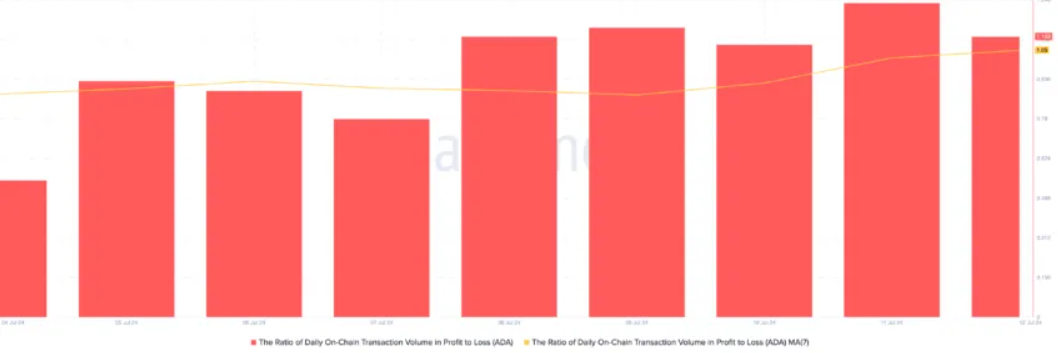
Đợt tăng giá hai chữ số của Cardano (ADA) trong tuần qua đã mang lại lợi nhuận cho một số nhà đầu tư của nó. Tạp chí Bitcoin đã đánh giá tỷ lệ khối lượng giao dịch on-chain hàng ngày của ADA theo lãi/lỗ bằng cách sử dụng đường trung bình động bảy ngày và đưa ra giá trị là 1,05.

Tỷ lệ khối lượng giao dịch on-chain hàng ngày của ADA theo lãi/lỗ | Nguồn: Santiment

/* custom css – generated by TagDiv Composer */

Chỉ số này đo lường tỷ lệ giữa khối lượng giao dịch có lãi và không có lãi hàng ngày của một tài sản. Tỷ lệ lớn hơn 1 cho thấy rằng khối lượng giao dịch có lãi nhiều hơn không có lãi, cho thấy tâm lý thị trường chung là tích cực. Ngược lại, khi giá trị của chỉ số dưới 1, điều đó chỉ ra rằng khối lượng giao dịch không có lãi nhiều hơn có lãi.

Tỷ lệ 1,05 của ADA trong tuần qua cho thấy rằng trung bình cứ mỗi giao dịch dẫn đến lỗ, có 1,05 giao dịch có lãi. Điều này có nghĩa là có nhiều giao dịch có lãi hơn những giao dịch dẫn đến lỗ.

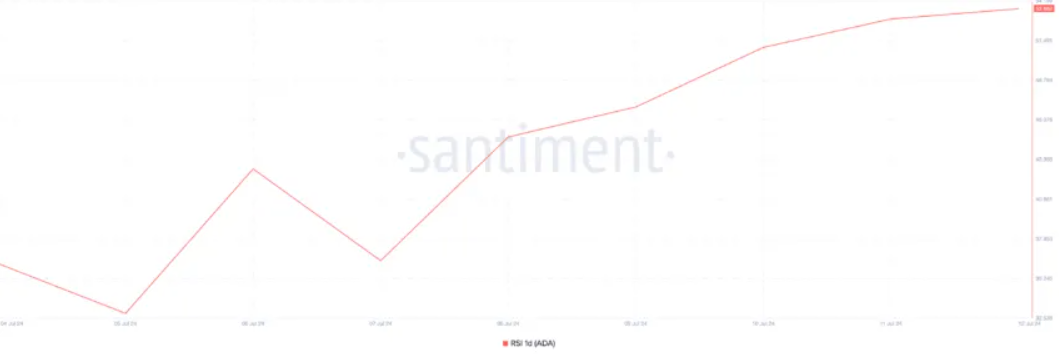
Hơn nữa, Chỉ số Sức mạnh tương đối (RSI) của ADA đang tăng, cho thấy rằng sự tăng giá này được hỗ trợ bởi nhu cầu thực tế đối với đồng coin này. Chỉ số này đang trong xu hướng tăng ở thời điểm hiện tại và đạt mức 53,66.

Chỉ số sức mạnh tương đối của Cardano | Nguồn: Santiment

RSI đo lường điều kiện quá mua và quá bán của một tài sản. Nó dao động từ 0 đến 100, với các giá trị trên 70 cho thấy tài sản bị mua quá mức và có khả năng giảm, trong khi các giá trị dưới 30 cho thấy tài sản bị bán quá mức và có thể tăng lại.

Với mức 53,66, RSI của ADA cho thấy áp lực mua đang tăng và bắt đầu vượt qua áp lực bán.

Dự đoán giá ADA: Altcoin này đang chuẩn bị tăng thêm

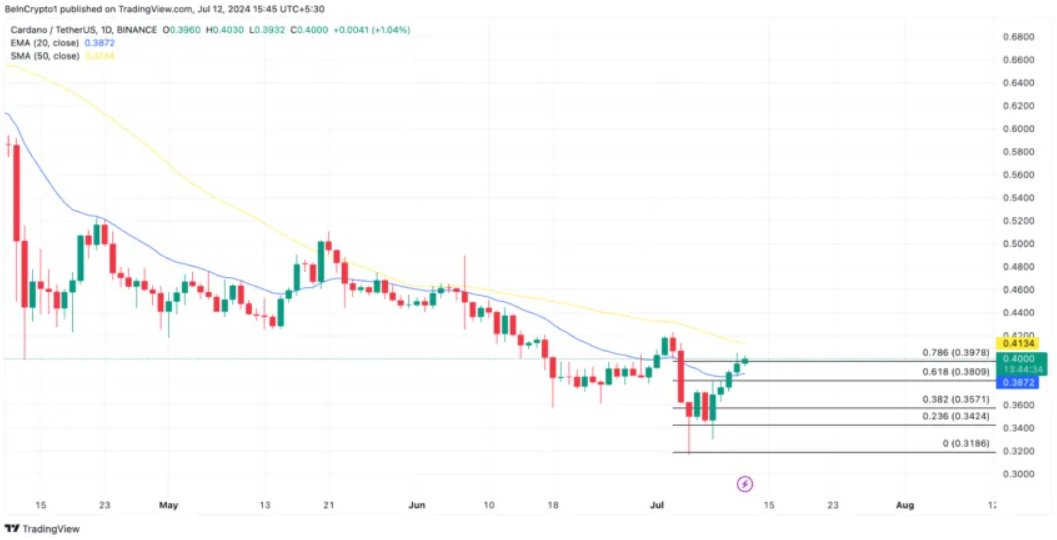
Sự tăng giá 22% của ADA trong tuần qua đã đẩy giá của nó lên trên đường EMA 20 ngày. EMA đo lường giá trung bình của một tài sản trong 20 ngày giao dịch gần nhất. Khi giá giao dịch trên mức trung bình quan trọng này, nó cho thấy áp lực mua đang tăng.

Biểu đồ ADA/USDT hàng ngày | Nguồn: TradingView

ADA hiện đang hướng đến đường SMA 50 ngày, đây là tín hiệu tăng giá. Nếu giá ADA vượt qua đường này thành công, nó sẽ cho thấy giá trung bình gần đây cao hơn giá trung bình dài hạn, xác nhận khả năng tăng thêm cho đồng coin này.

Nếu điều này xảy ra, ADA sẽ giao dịch trên mức $0,41.

Tuy nhiên, nếu xảy ra sự giảm giá, giá altcoin này sẽ giảm xuống $0,38.

Bạn có thể xem giá ADA ở đây.

Disclaimer: Bài viết chỉ có mục đích thông tin, không phải lời khuyên đầu tư. Nhà đầu tư nên tìm hiểu kỹ trước khi ra quyết định. Chúng tôi không chịu trách nhiệm về các quyết định đầu tư của bạn. 


SN_Nour

Theo Beincrypto

/* custom css – generated by TagDiv Composer */

From views to value: The future of blockchain innovation in social media | Opinion

The age of direct-to-consumer is here in all aspects of the game. The $250 billion creator economy isn’t immune to this change either.

For long, traditional social media platforms have acted as gatekeepers of revenue flows, limiting ways in which creators, their followers, and unassuming advertisers engage with each other.

After seeing multiple web2-based iterations fail to balance these three pillars, it would seem the future is rightfully leaning toward web3 to democratize social media.

Empowering creators, users, and advertisers

According to a report from Mordor Intelligence, the impact of blockchain in the media, advertising, and entertainment market is expected to soar to $27.29 billion by 2029, at a CAGR of 78.49%. This transformation, which we are witnessing live, has been made possible with the emergence of defi integrations, which cut out the middleman and lay the groundwork for a new era of creativity, engagement, and trust. 

From offering solutions to dated problems like digital piracy, skewed royalty distributions, and monopoly of user data, blockchain tech is now finding rampant use in redefining human interactions. It starts with empowering creators, without whom such platforms become just another community chat center.

By thinking beyond brand engagements, SocialFi platforms are helping create a model where loyal, paying communities sustain creative livelihoods. While existing solutions focus on only the creator, the other two legs of the system — users and advertisers — can no longer be ignored. 

Here is where a tokenized ecosystem comes into play. By enabling creators to earn directly through audience engagement and rewarding every user for their digital footprint, SocialFi’s next phase should create mutually rewarding processes for everyone involved. This approach not only democratizes earnings to ensure creators are compensated fairly but also boosts user engagement by blending the interests of creators and their audiences. 

Additionally, advertisers who are part of this ecosystem have greater control over their spending, getting to engage better with the entire user spectrum and thus projecting better returns on their investment.

NFTs for digital ownership

A few years ago, NFTs appeared with a bang but quickly sobered down as hype clouded their real-world applications in tokenizing digital assets. That being said, the sector continues to see healthy funding as investors bet on its applications in industries like art, real estate, photography, music, and social content — in essence, a connection with RWA.

We’re increasingly seeing that merely making content decentralized isn’t enough. There needs to be a way to stamp your IP on it, and monetize forever. In this regard, NFTs enable creators to have true ownership with the added prospects of merchandising and recurring revenue. 

Another point to consider is the emergence of short-form visual content as the most popular form of content on the internet today. Despite their popularity, copyright violations and lack of creator credits disregard the efforts of digital participants. By offering genuine scope for visual content to be instantly converted into NFTs, SocialFi platforms can add a layer of transparency and monetization, previously untapped. 

Despite such inherent potential, integrating blockchain into the media industry is not without its challenges. Issues like scalability and interoperability aren’t new, and much rides on emerging low-code solutions that enable developers to build scalable L2s, more effectively and at lower costs.

Several networks, like Sui, for example, provide a robust on-chain development environment and equip platforms with high throughput—a crucial factor in media applications that demand high transaction speeds for optimum user experience. 

Building on-chain also ensures that decentralized and mainstream fintech tools can be plugged into a common ecosystem. Not to mention the preservation of intellectual property and thwarting cyber attacks by governing such platforms on-chain. All these factors are especially useful for seamless real-time payouts, including for micro-payments, which traditional fiat based transfers cannot service due to high transaction costs. 

The complexity of web3 interfaces may be its biggest impediment for now, but with newer platforms incorporating the familiarity of web2 with the flexibility of defi, the opportunity to bridge two different worlds has never been more achievable. 

Tổng hợp và chỉnh sửa: ThS Phạm Mạnh Cường
Theo Crypto News

Các nhà lãnh đạo tôn giáo tranh luận về việc đi nhà thờ trong Metaverse

Khi các đài phát thanh và truyền hình đầu tiên bắt đầu tràn vào các gia đình trên khắp thế giới, các chương trình tôn giáo là một trong những chương trình chính của cả hai phương tiện truyền thông mới. Giờ đây, khi thế giới quay lưng lại với màn hình phẳng, 2D và các chương trình phát sóng âm thanh bị giới hạn tần số, những tín đồ tôn giáo trên khắp thế giới đã bắt đầu áp dụng các công nghệ Metaverse (vũ trụ ảo), Web3, điện toán không gian (Spatial Computing*) và trí tuệ nhân tạo (AI) như các kênh để kết nối với đức tin.

Tuy nhiên, vẫn còn những người phản đối tin rằng có những nguy hiểm liên quan đến các công nghệ này, các nhà lãnh đạo tôn giáo tự hỏi liệu các công nghệ hiện đại có cần thiết không, và hàng tỷ tín đồ tôn giáo truyền thống đang chờ đợi hướng dẫn.

Về phía ủng hộ, Sreevas Sahasranamam, Giáo sư tại Đại học Glasgow, gần đây đã giải thích về tiềm năng tích cực của một metaverse đối với những người thực hành đức tin Hindu trên tạp chí Swarajya:

“Hãy tưởng tượng nhận được Geetopadesha (Bài hát Thần thánh*) trực tiếp từ Chúa Krishna. Không, tôi không nói về việc sử dụng cỗ máy thời gian khoa học viễn tưởng để đưa tôi quay ngược thời gian về cuộc chiến Kurukshetra*. Đúng hơn, tôi đang nói về việc ở trong phòng khách của mình, đóng vai Arjuna, tìm kiếm câu trả lời cho những cuộc đấu tranh nội tâm của mình thông qua Geetopadesha từ hình đại diện của Chúa Krishna trên kính Ray-Ban của Meta.”

/* custom css – generated by TagDiv Composer */

Nhiều người nhìn nhận các phẩm chất sống động của vũ trụ ảo, đặc biệt khi trải nghiệm qua thực tế ảo, là một phương pháp để đưa họ gần hơn với các kinh thánh và câu chuyện về tôn giáo của họ.

Sahasranamam cũng viết về việc sử dụng vũ trụ ảo như một phương tiện thiền, nói rằng sự đắm chìm mà nó mang lại có thể dẫn đến những trải nghiệm sâu sắc và ý nghĩa hơn.

Không phải ai cũng hồ hởi về tiềm năng của metaverse như một công cụ tôn giáo. Gavin Ortlund và Jay Kim, các nhà thần học và mục sư Kitô từ Hoa Kỳ, xem nó như một điều có thể thêm vào mô hình hợp tác hiện tại, nhưng cả hai đều đồng ý rằng nó không thể thay thế cho nhà thờ vật lý.

Hai người đã thảo luận về vấn đề này trong một video gần đây. Trong buổi nói chuyện, Kim tự hỏi liệu ý tưởng “nhà thờ trong vũ trụ ảo” có phải là một nghịch lý hay không.

Sự phản đối chính của bộ đôi này dường như là nhắm vào bản chất kỹ thuật số/ảo của metaverse. Theo Ortlund:

“Vì vậy, lễ rửa tội và Bữa Tiệc Thánh, và đó là những hành vi thể chất, một nhà thờ là vật lý không thể thiếu được, bạn biết đấy, bạn cần nhà thờ vật lý bởi vì bạn phải có người ở đó để xuống nước hoặc ăn bánh và rượu. Và đó chỉ là một ví dụ về việc thứ gì đó sẽ bị mất nếu bạn tránh xa sự tiếp xúc trực tiếp, tiếp xúc cơ thể.

Ở Rome, nhà thờ Công giáo có một quan điểm khác hoàn toàn. Họ chấp nhận một số công nghệ vũ trụ ảo, đã dính dáng đến Web3, token không thể thay thế (NFT) và vũ trụ ảo trong vài năm qua, nhưng Giáo hoàng Pope Francis không phải là một fan của tất cả các công nghệ hướng tương lai.

Gần đây, Giáo hoàng đã có một số từ ngữ chọn lọc liên quan đến sự khởi đầu của kỷ nguyên trí tuệ nhân tạo:

“Có rủi ro cơ bản về lợi ích không cân xứng cho một số ít với sự nghèo đói của nhiều người.”

Đơn thuốc cuối cùng của ông là ủng hộ sự phát triển của một nền tảng đạo đức và lập pháp mạnh mẽ chống lại những tác hại hiện hữu và bất lợi do AI gây ra, mặc dù ông nhận ra lợi ích của công nghệ khi được sử dụng một cách có trách nhiệm.

*Geetopadesha là một phần trong tác phẩm hindu kinh điển được gọi là “Bhagavad Gita.” Trong Bhagavad Gita, Geetopadesha là phần nơi Chúa Krishna truyền dạy tri thức và lời khuyên cho Arjuna, một nhân vật quan trọng trong câu chuyện. Geetopadesha thường được xem như một tài liệu tôn giáo và triết học quan trọng trong văn học Hindu, chứa những lời dạy của Chúa Krishna về cuộc sống, đạo đức, và sứ mạng của mỗi người. Trong bản dịch sang tiếng Việt, Geetopadesha có thể được dịch là “Bài hát của Chúa” hoặc “Bài hát Thần thánh.”

*Cuộc chiến Kurukshetra là một trong những sự kiện quan trọng trong truyền thống Hindu được mô tả trong các văn bản kinh điển như Mahabharata. Đây là cuộc chiến giữa hai gia tộc lớn là Pandavas và Kauravas, xảy ra ở miền Bắc Ấn Độ. Cuộc chiến Kurukshetra không chỉ là một cuộc chiến vũ trang, mà còn là cuộc đấu tranh giữa cái thiện và cái ác, giữa công lý và bất công. Trong cuộc chiến này, nhiều sự kiện quan trọng xảy ra và nhiều bài học đạo đức được truyền đạt thông qua hành động và lời nói của các nhân vật trong Mahabharata.

*Spatial Computing là một khái niệm trong lĩnh vực công nghệ, đề cập đến việc sử dụng máy tính để tương tác với không gian và môi trường vật lý xung quanh một cách trực tiếp và tự nhiên hơn. Đây thường là sự kết hợp giữa thực tế ảo, thực tế tăng cường và cảm biến địa lý để tạo ra trải nghiệm tương tác 3D trong không gian thực tế. Trong ngữ cảnh của công nghệ thông tin và truyền thông, spatial computing là một khái niệm phổ quát và đa dạng, liên quan đến việc áp dụng các công nghệ như máy học, thị giác máy tính và cảm biến để tạo ra các ứng dụng và trải nghiệm mới.

Theo dõi Twitter (X): 

Thạch Sanh

Theo Cointelegraph

/* custom css – generated by TagDiv Composer */

Europol: Bitcoin is ‘most abused’ crypto by criminals

According to a recent report from the Europol Internet Organized Crime Threat Assessment, Bitcoin remains the most commonly exploited cryptocurrency by criminals.

The report noted that Bitcoin is often converted to stablecoins like Tether (USDT) for stability and is still frequently encountered in cybercrime and fraud. The Tron blockchain’s lower transaction fees have made it more popular for USDT transactions. 

“Bitcoin is still the cryptocurrency that is most abused by criminals but the use of alternative coins (altcoins) seems to be growing,” the report read. 

Stablecoins with blacklisting functionality have allowed law enforcement to freeze suspicious funds.

Monero’s rise in criminal popularity 

Monero (XMR) is an altcoin known for emphasizing privacy and anonymity. Unlike Bitcoin, which offers a transparent ledger, Monero uses cryptographic techniques to blur transaction details. 

These blurred transactions make it hard for law enforcement to trace a fraudulent transaction’s sender, recipient, and amount. 

According to the report, this privacy-centric design has made Monero popular among individuals seeking to maintain financial confidentiality and among cybercriminals. 

Also, Monero uses ring signatures, stealth addresses, and confidential transactions to ensure user anonymity. These features allow it to be used in various illicit activities, such as ransomware attacks, where perpetrators demand payment in Monero due to its untraceable nature.

According to the report, Monero is used on the dark web to purchase illegal goods and services, as its privacy features help it evade law enforcement scrutiny. Despite its controversial uses, Monero is also valued for legitimate privacy-focused financial transactions.

Europol’s mention of other crypto-money laundering techniques 

The report also touched on cryptocurrency laundering techniques that are evolving with varying complexity based on the nature of the crime. 

Investment frauds often use simple and common methods, relying on traditional channels like money mules and international bank accounts. But, encrypted messaging apps are now preferred for cash-to-crypto exchanges, bypassing compliance checks and hiding identities.

There is also increasing use of crypto debit cards in cybercrime

“The use of cryptocurrency debit cards has also re-emerged, as these can be used to quickly convert cryptocurrency to cash at ATMs,” the report read

Tổng hợp và chỉnh sửa: ThS Phạm Mạnh Cường
Theo Crypto News

Lightning Labs ra mắt Taproot Assets v0.4 để cải thiện thanh toán stablecoin

Lightning Labs thông báo rằng Taproot Assets v0.4 đã được phát hành trên mainnet, cho phép đúc tài sản kỹ thuật số như stablecoin trên Bitcoin và sau đó gửi chúng qua Lightning Network.

“Với Taproot Assets, người dùng có thể thực hiện chuyển giao tài sản tức thời với chi phí thấp, mang lại hàng nghìn tỷ khối lượng stablecoin cho Bitcoin”.

Phiên bản trước đó của Taproot Assets, được ra mắt trên mạng chính vào cuối năm ngoái, không hỗ trợ Lightning Network.

Công ty cho biết “thay vì mỗi đơn vị phát hành tài sản cần phải tự thiết lập và duy trì một mạng riêng bao gồm các node thanh khoản và node định tuyến, tất cả các đơn vị phát hành có thể tận dụng các hiệu ứng mạng hiện có của 5.400 Bitcoin được phân bổ cho Lightning Network. Chúng tôi giờ đây đã có khả năng tạo ra các mạng đa tài sản Bitcoin và Lightning”.

/* custom css – generated by TagDiv Composer */

Lightning Labs đề xuất chuyển đổi Bitcoin thành một mạng đa tài sản có khả năng mở rộng. Các nhà phát triển hy vọng sẽ gia tăng tính hiệu cho thị trường stablecoin khổng lồ vốn chủ yếu dựa vào mạng Ethereum và Tron. 

Năm ngoái, CEO của Lightning Labs – Ryan Gentry cho biết, với tư cách là một giao thức stablecoin, Taproot Assets sẽ vừa ít tốn kém vừa an toàn hơn.

“Nó sẽ tích hợp với Lightning Network, cung cấp khả năng thanh toán tức thời với mức phí thấp mà người dùng stablecoin luôn mong muốn. Và nó sẽ được tích hợp vào blockchain Bitcoin, cho đến nay là blockchain an toàn và đáng tin cậy nhất.”

Theo dõi Twitter (X): 


Itadori

Theo The Block

/* custom css – generated by TagDiv Composer */